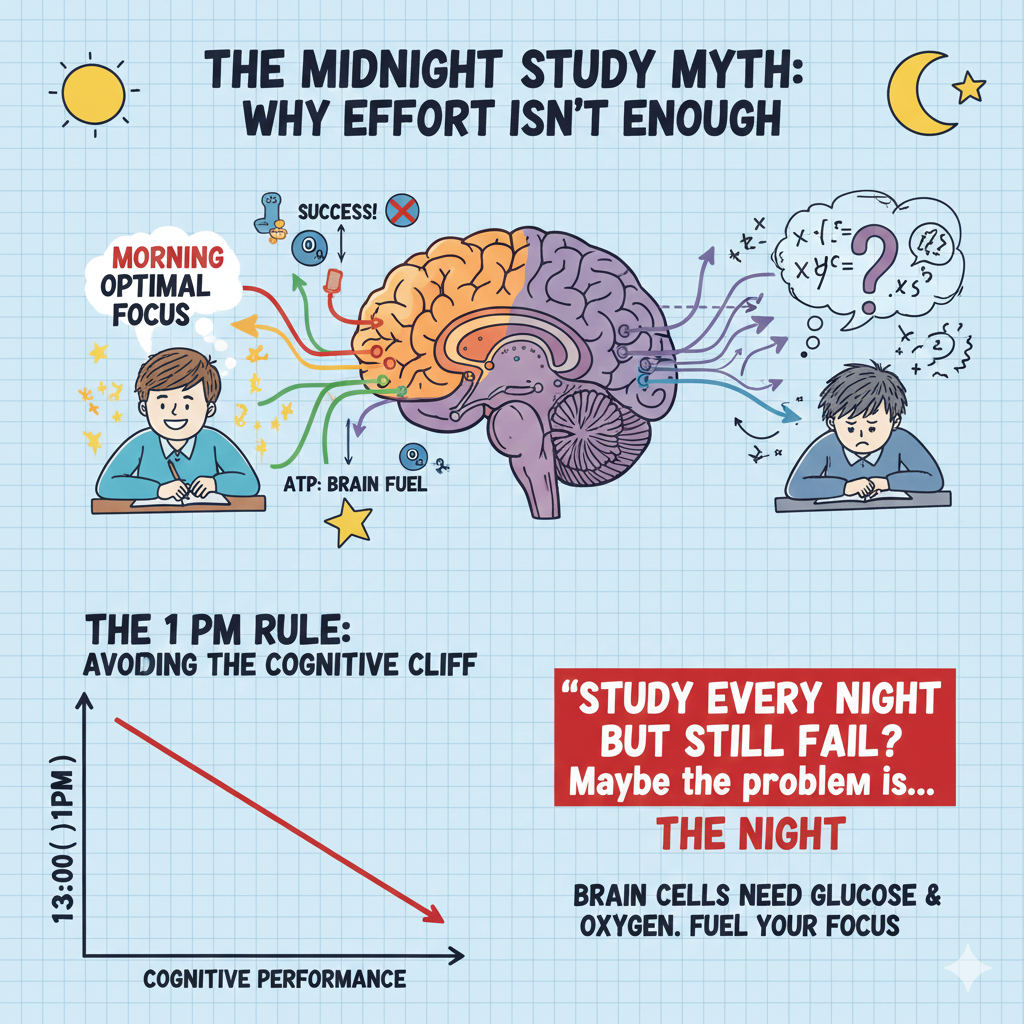
I study every night—so why do I still fail?
You can study every night. You can sit at your desk for hours.
You can highlight entire chapters until the pen runs dry. And still fail on exam day.
Are you not smart? NO.
Are you not trying enough? NO>
Because your brain wasn’t capable of learning at that time of day.
If you’re studying late every night only to feel disappointed on exam day, it’s not a failure of effort. It’s a failure to align your studying with your brain’s natural biology. Your strategy for tackling math needs an upgrade, not your willpower.
1. The Clock Is Your Worst Enemy (The Brain Wave Barrier)
The biggest barrier to deep learning is often the time of day.
- The Myth: Studying when you are already tired “proves” your dedication.
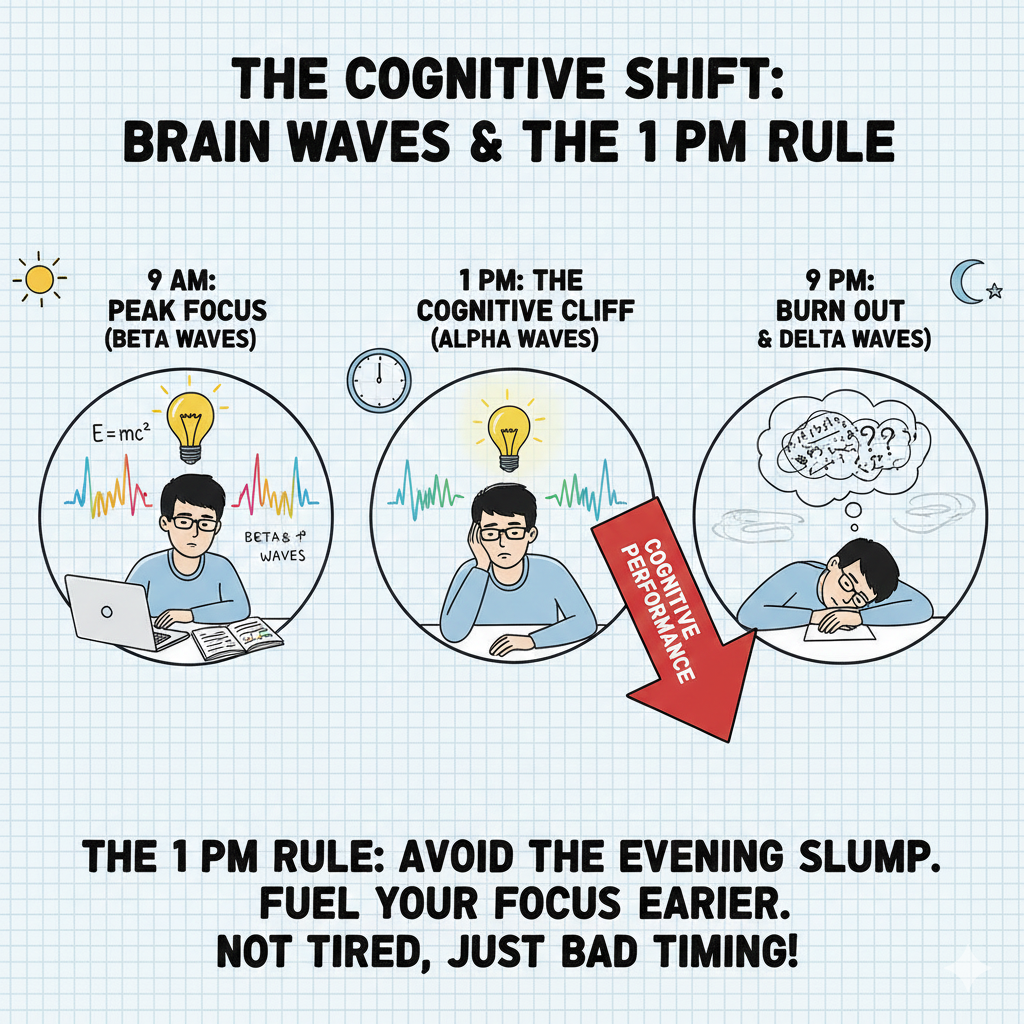
- The Reality: Deep understanding requires high-frequency brain waves (like Beta waves), associated with alert, focused concentration. As the day progresses and we get tired, our brain naturally shifts towards lower-frequency waves (like Theta and Delta), which are for relaxation, memory consolidation, and sleep.
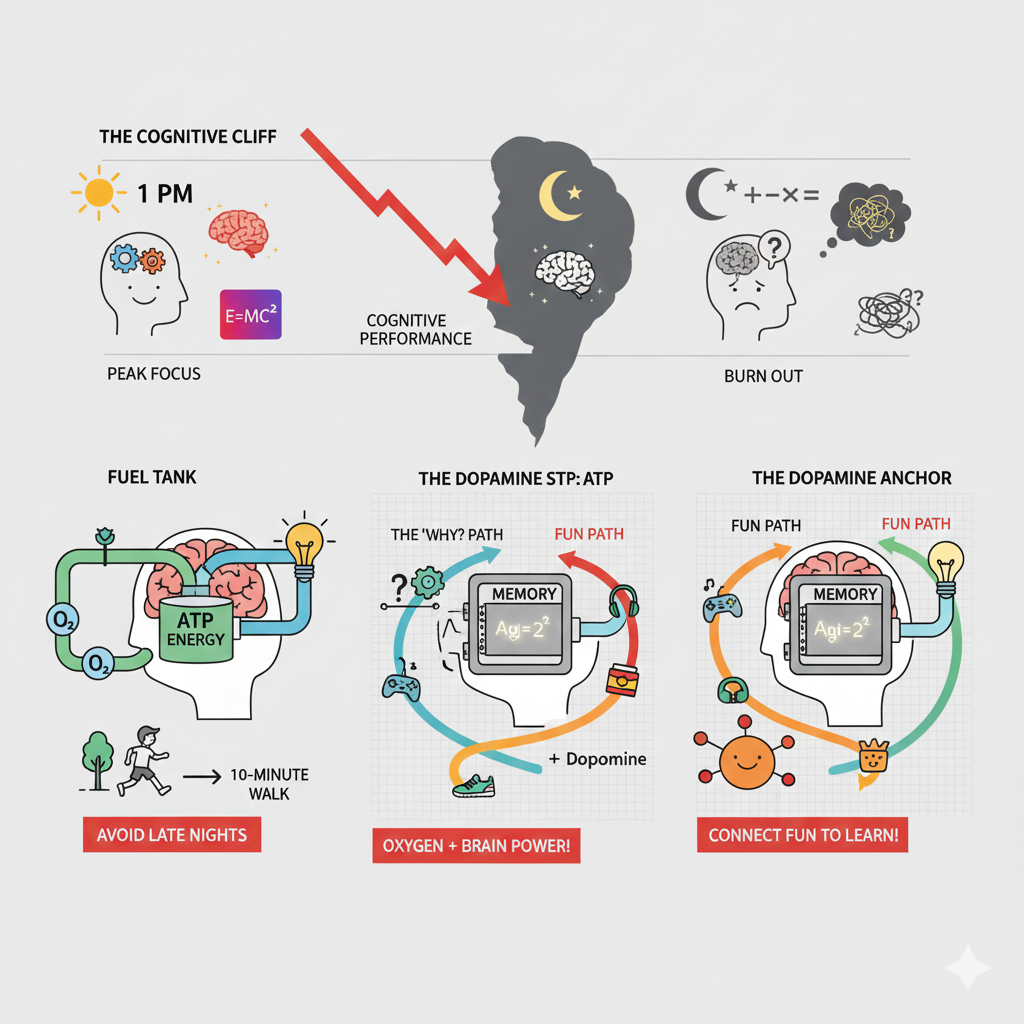
- The Rule: The best time for learning new, complex math concepts is before 1:00 PM (or when your natural cognitive peak occurs). Trying to force your brain to understand a new calculus concept at 9:00 PM is like trying to run a marathon on an empty gas tank.
The Brain Wave Basics: Why Evenings Betray You
Your brain operates on electrical rhythms called brain waves, measured in Hertz (Hz). These waves shift based on what you’re doing—and when you’re doing it.
- Beta Waves (12-30 Hz): These are your “focus mode” waves—alert, analytical, perfect for math problems that need logic and concentration. But beta waves peak in the morning when cortisol (your alertness hormone) is high, making 8-10 AM ideal for tackling new concepts like algebra or geometry.
- Alpha Waves (8-12 Hz): Relaxed but attentive, great for creative problem-solving or reviewing material. They flow best during calm, daytime hours when you’re not fighting fatigue.
Evenings? Your brain shifts toward theta (4-8 Hz) or delta waves (0.5-4 Hz)—states for relaxation and sleep prep. A 2016 study found students perform better in morning math classes because circadian rhythms align with peak cognitive sharpness before noon. Pushing through at midnight? You’re fighting biology, leading to poor retention and those “I knew this yesterday!” moments that crush your self-belief.
For ADHD brains, this is amplified. Delayed sleep phases (common in ADHD) make mornings tough, but evenings worsen “time blindness” and impulse control, turning study into scattered scrolling or frustration. Research from ADDitude Magazine notes ADHD students often overestimate evening productivity, only to underperform on tests due to disrupted wave patterns.
Let’s Make it simple: Why Evening Studying Fails (Even When You Work Hard)
Your brain runs on electrical rhythms—alpha, beta, theta waves—shifting throughout the day.
Morning to mid-day (especially before 1 p.m.)
→ Beta waves are strong.
→ Working memory is sharp.
→ Logic circuits fire cleanly.
→ You can understand new concepts.
Late afternoon to evening
→ Beta waves drop.
→ Theta waves rise.
→ The brain switches from “analysis mode” to “survival mode.”
→ You can practice things you already understand, but learning new material becomes almost impossible.
This is why you “study every night” but still blank out on the test.
You were forcing your brain to do the wrong task during the wrong wave state.
Effort doesn’t override biology.
But when should I study then?
Science is painfully clear:
The best time to learn new math is before 1 p.m.
That’s when working memory, reasoning speed, and pattern-recognition are at their peak.
But what if you can’t wake up early?
Or your ADHD body doesn’t follow a strict schedule?
Here’s the realistic solution:
Use Your Daylight for Understanding — Evenings for Practice
1. Use morning or school hours to understand the topic.
You do not need a 5 a.m. miracle routine.
But you do need daylight.
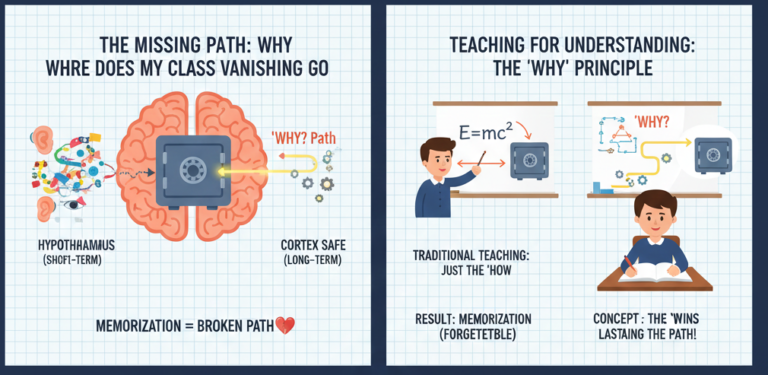
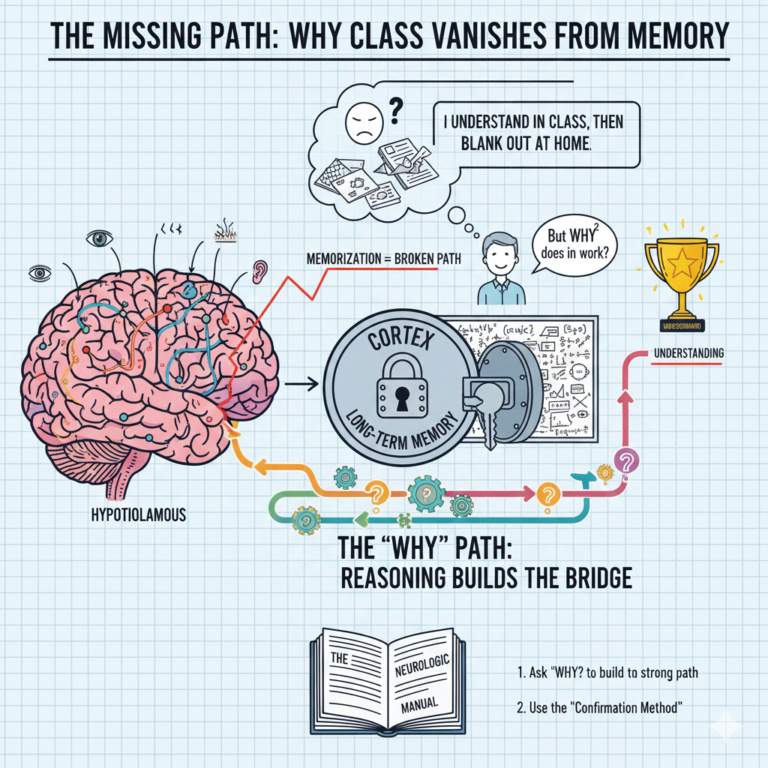
If you can ask “why?” during class, you instantly build the neural path to the “safe” where that concept is stored.
2. Ask WHY to everything you don’t understand.
Every “why” question cuts a direct path to long-term memory.
If you don’t ask, your brain won’t store it.
3. Take small notes only on the logic, not on copying.
Your brain remembers reasoning, not transcription.
4. On weekends: do math as the first task of the day.
Not because of discipline.
Because of neurochemistry.
5. In the evenings: only practice what you already understand.
Even when your brain is tired, you can drill problems you’ve already comprehended.
You cannot learn new material in this state—but you can strengthen neural paths through repetition.
Still not convinced?
mathswithadhd
The Science-Backed Best Time: Before 1 PM (And How to Make It Work with ADHD)
According to chronobiology research, cognitive tasks like math thrive before 1 PM. A Barcelona study linked morning light exposure to 34-57% fewer ADHD symptoms, as it regulates melatonin and boosts alertness. USC research confirms sunlight early in the day enhances focus for math-heavy subjects.
But ADHD often means late nights and groggy mornings—waking early isn’t always realistic. Here’s how to hack it:
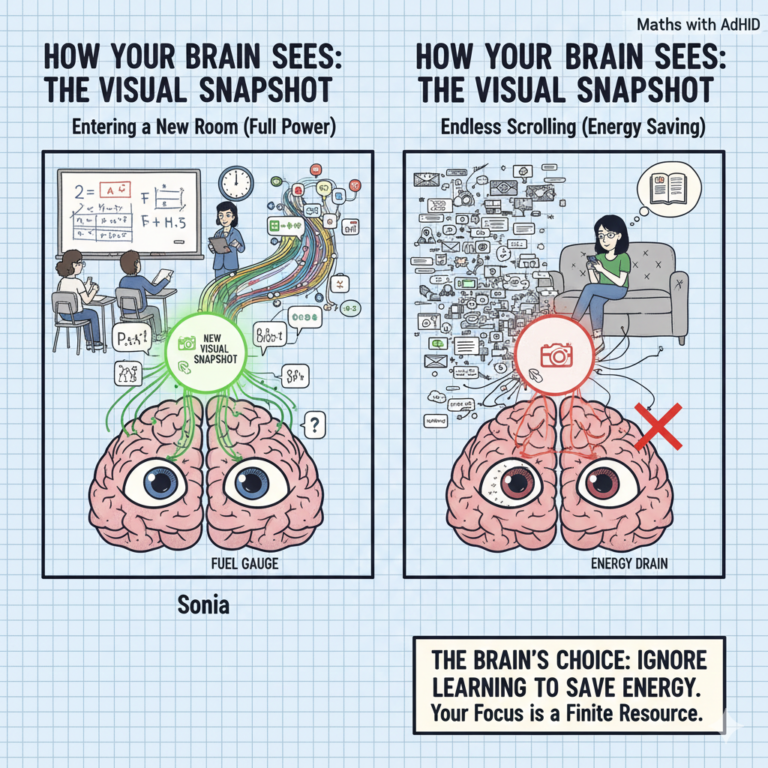
- Prioritize Classes: School happens in peak hours—use it! Ask “why” for every confusing step (e.g., “Why do we factor quadratics?”). This builds understanding during beta-wave prime time. Take visual notes—doodles or color codes—to lock it in without overload.
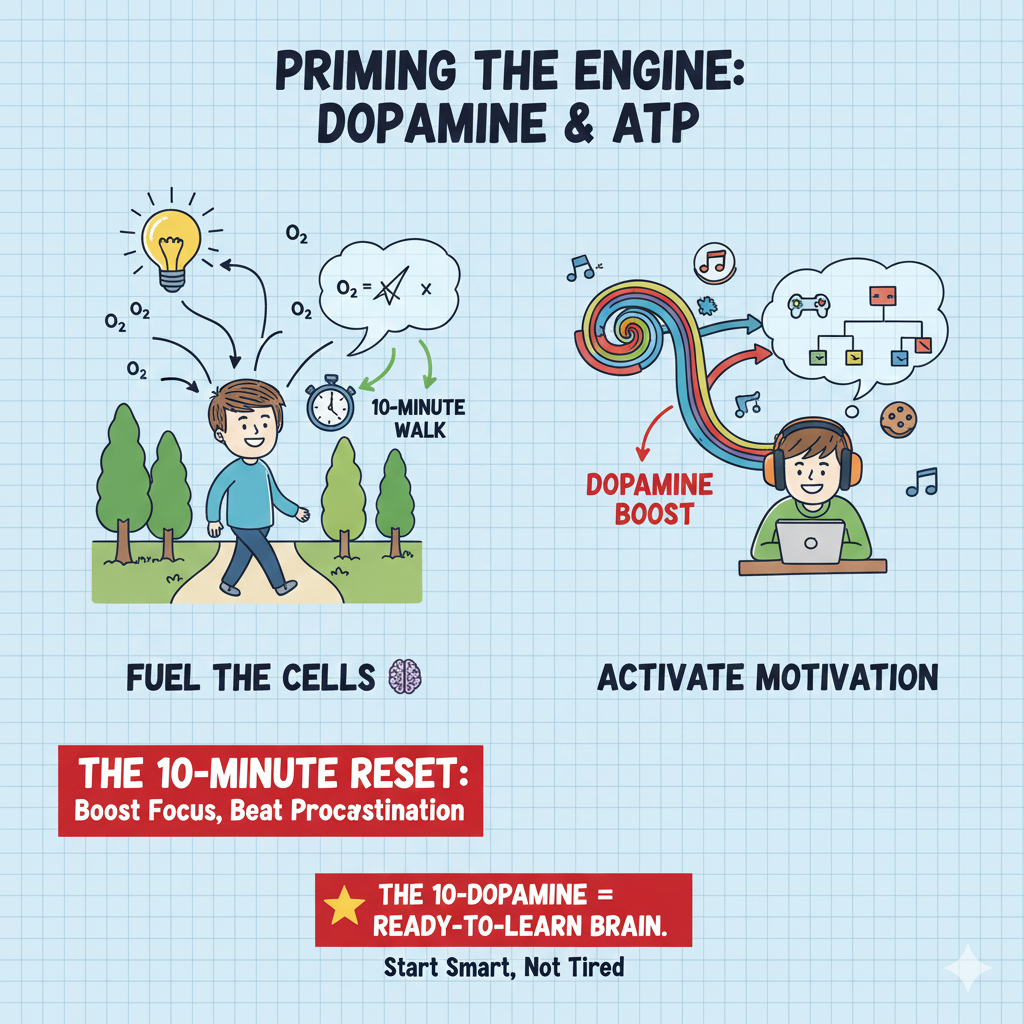
- Weekend Mornings First: Treat weekends as your “understanding zone.” Wake naturally (aim for 8-10 AM), grab a protein snack (stabilizes blood sugar for focus), and hit new topics first. Science shows mornings improve long-term memory by 20%.
- Evenings for Practice Only: Once you get the concept (from class/weekends), evenings work for drills. Your relaxed alpha waves suit repetition, not learning. Keep sessions short—15-20 min with 5-min breaks (adapted Pomodoro from ADHD studies).
Result? You’ll enter exams confident, knowing failure wasn’t “you”—it was mismatched timing. Rebuild trust in yourself: Track one week of morning-focused study and see the difference.
Ready to try? Download my free “ADHD Math Wave Tracker” below to log your sessions and waves. What’s your biggest evening study struggle? Share in the comments—we’re in this together.
You are not failing because you’re lazy.
You are failing because you’ve been studying against your own brainwaves.
Once you study in the right window—before 1 p.m.—and save evenings only for practice, your performance changes dramatically.
This isn’t mindset.
It’s physiology.
mathswithadhd
I study every night but still fail exams, studying every night and still failing ADHD, why studying hard doesn’t lead to results, I revise every day but fail tests, studying consistently but not improving grades, why effort doesn’t equal results in studying, ADHD studying every night but failing, why I work so hard and still fail school, studying for hours every day but failing exams, why night studying doesn’t work for my brain, studying all the time but not understanding, effort without progress studying ADHD, why my grades don’t match my effort, studying regularly but failing maths, why studying every night makes me more tired not better, ADHD brain studying hard but failing, why I study so much and still forget everything, studying daily but failing exams ADHD, why revision isn’t working for me, studying every night but confidence keeps dropping