I can’t make myself start.
Use puzzles and quick dopamine games to prime attention before hard tasks
Before your brain can focus, it needs ignition—not pressure.
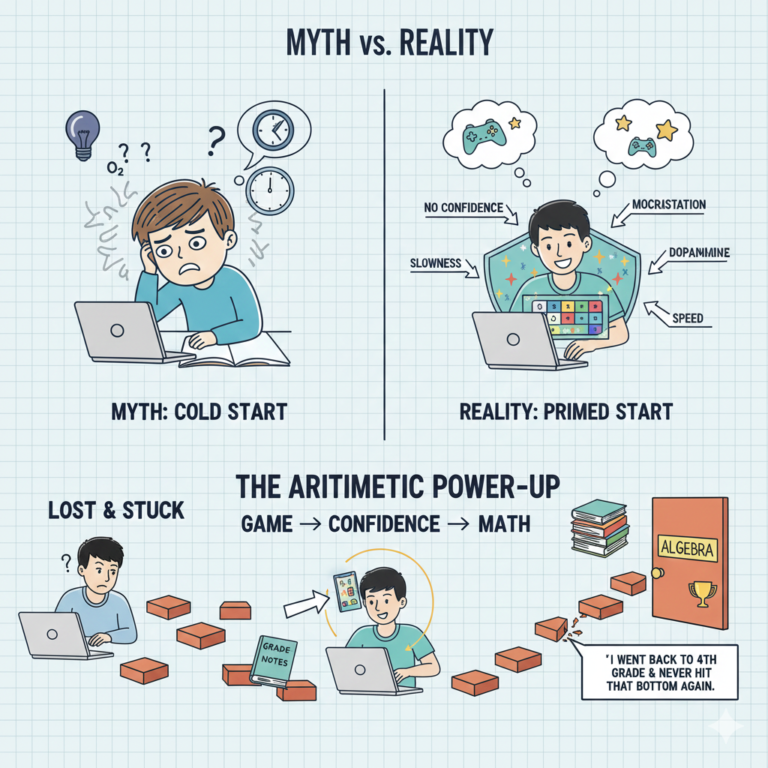
Trying to jump from scrolling social media to complex algebra is a huge mismatch for the ADHD brain. You’re starting your high-effort task with zero motivation (zero dopamine), guaranteeing resistance and distraction.
The solution is not willpower; it’s Priming the Engine.
1. The Science: Why Dopamine is Your Study Key 🔑
Your brain cannot switch from resting to deep concentration on command.
Especially not an ADHD brain.
ADHD brains need dopamine priming—a small spark that activates the attention networks before any heavy task like math, studying, or solving new concepts. The ADHD brain is often deficient in dopamine, the neurotransmitter that governs motivation, reward, and focus. When a task feels boring or hard (like math), your brain offers almost no dopamine reward, making it incredibly difficult to start or sustain attention.
This is where puzzles, logic games, and quick dopamine triggers become powerful tools.
They’re not distractions.
They’re neurological warm-ups.
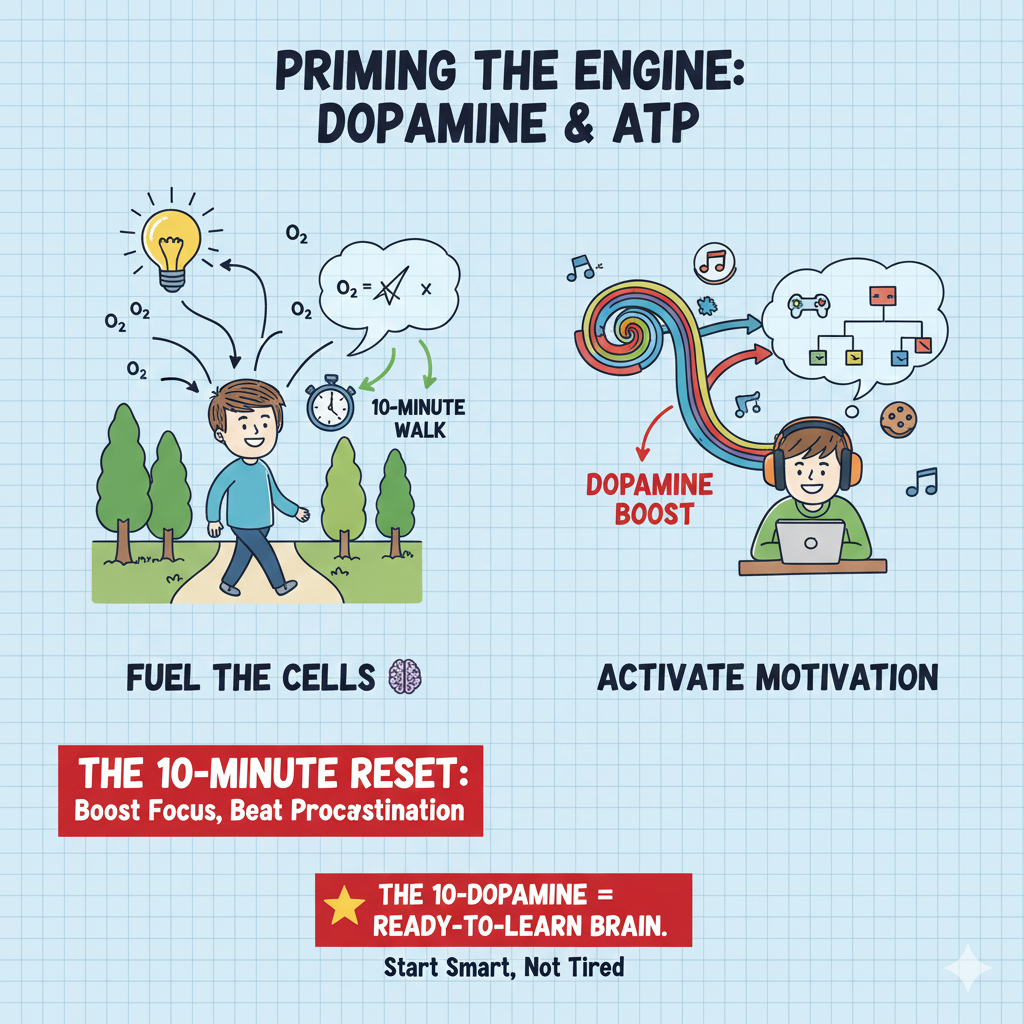
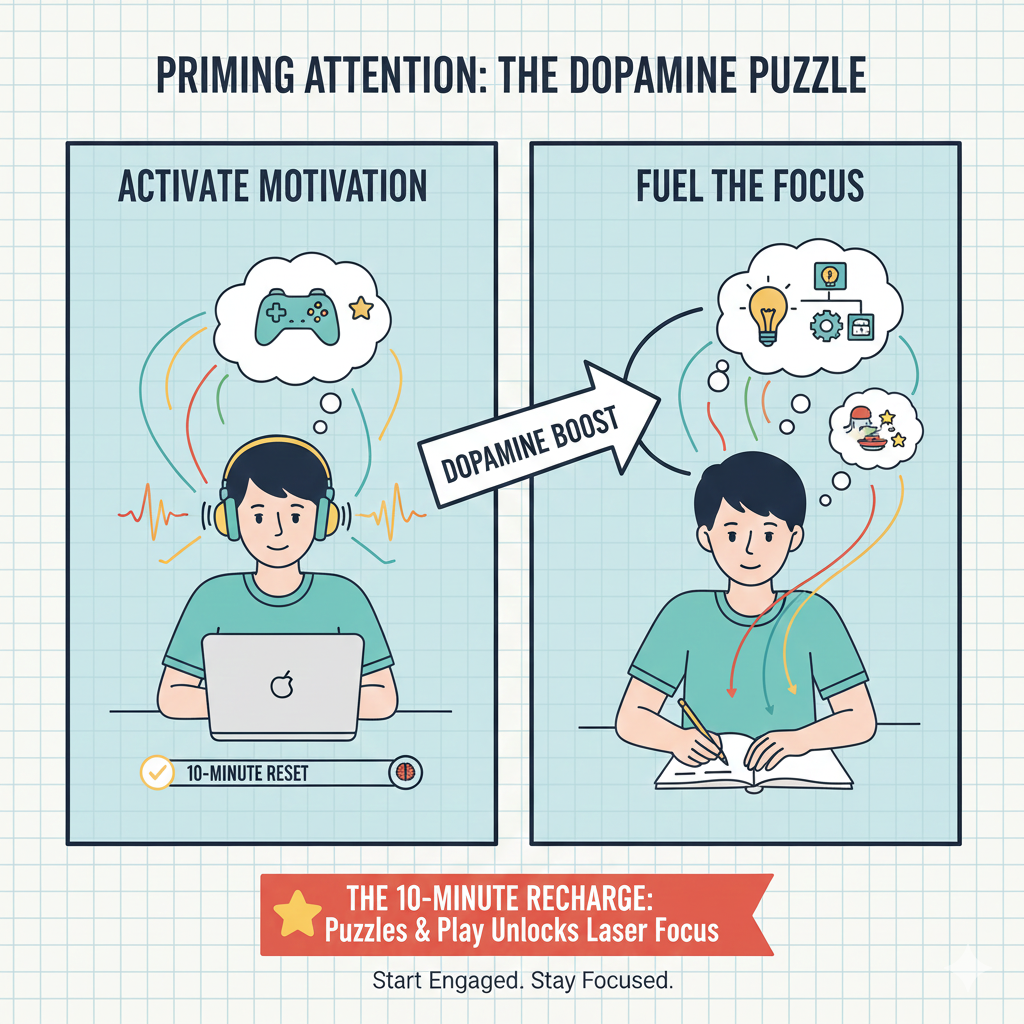
The Goal: We need a short, intense burst of dopamine before starting the hard math work. This “primes the pump,” activating the brain’s reward circuits and smoothing the transition into the difficult task.
The Rule: Spend 5 to 10 minutes on a high-dopamine, low-commitment activity right before you open your textbook.
Why They Work
When you do a short puzzle:
• Dopamine rises → focus becomes possible
• Beta waves increase → the brain shifts into problem-solving mode
• Task engagement switches on → your brain enters “let’s do this” rather than “I can’t start”
• Overwhelm decreases → because the first success is small and safe
A 2–5 minute puzzle creates the perfect launchpad for a harder task.
2. Your Dopamine Primer Toolkit 🛠️
Choose quick activities that are engaging but have a definitive, short end point. This prevents them from turning into procrastination.
|
ACTIVITY CATEGORY |
WHY IT WORKS |
EXAMPLES OF USE |
|
Puzzles & Quick Games |
Engages the problem-solving centers without high stakes; offers a quick, satisfying reward loop.* |
One quick round of Sudoku or Minesweeper. * Solving a short online logic puzzle. * Playing a favorite mobile game for exactly 5 minutes (set a timer!). |
|
Sensory/Movement Boost |
Connects the body and mind, boosting ATP (energy) and breaking up mental stagnation.* |
Listen to one pump-up song you love. * Do 20 jumping jacks or quick stretches. * Your essential 10-minute walk (best for oxygen/ATP). |
|
Interest Anchor |
Connects a boring task to a strong, high-dopamine interest you already have.* |
Read one comic panel or one page of a favorite book. * Watch a 30-second clip of your favorite TV show. |
3. The Implementation Plan (The Transition)
This strategy only works if the transition is managed properly:
- Set a Timer: Absolutely crucial. The dopamine activity must end when the timer goes off.
- The Bridge: When the timer rings, don’t jump straight into the hardest problem. Immediately transition to a low-effort math task first, like reviewing the vocabulary from yesterday’s lecture or neatly writing out the assignment headers.
- Maximum Benefit: Use this priming technique for the toughest subjects and the earliest stages of a long study session.
I can’t make myself start studying, ADHD can’t start tasks even when I want to, why I can’t get myself to begin studying, ADHD task initiation problems, I know what to do but can’t start ADHD, executive dysfunction starting tasks, why starting is the hardest part ADHD, ADHD paralysis before studying, I sit down to study but can’t begin, why my brain won’t let me start, ADHD procrastination starting tasks, mental block before studying ADHD, can’t initiate studying even with motivation, ADHD freeze response before work, why starting feels impossible ADHD, ADHD brain stuck before beginning tasks, I want to study but can’t start, ADHD difficulty initiating focus, executive function problems starting studying, ADHD inertia starting tasks