I listen, I read, but nothing sticks.
How Learning Actually works?
(And Why Your Study Habits Keep Failing)
Learning is not magic. It is mechanics.
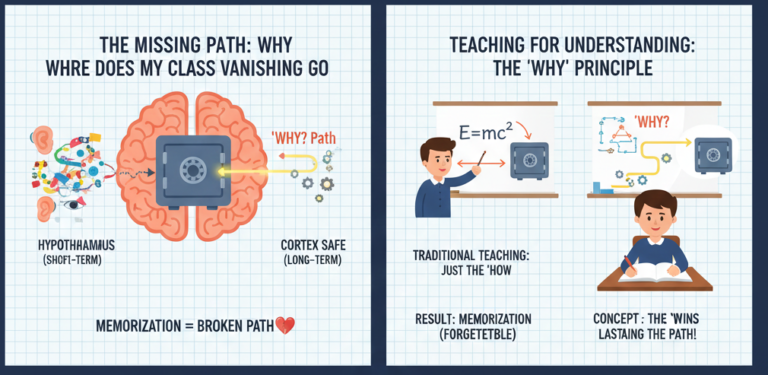
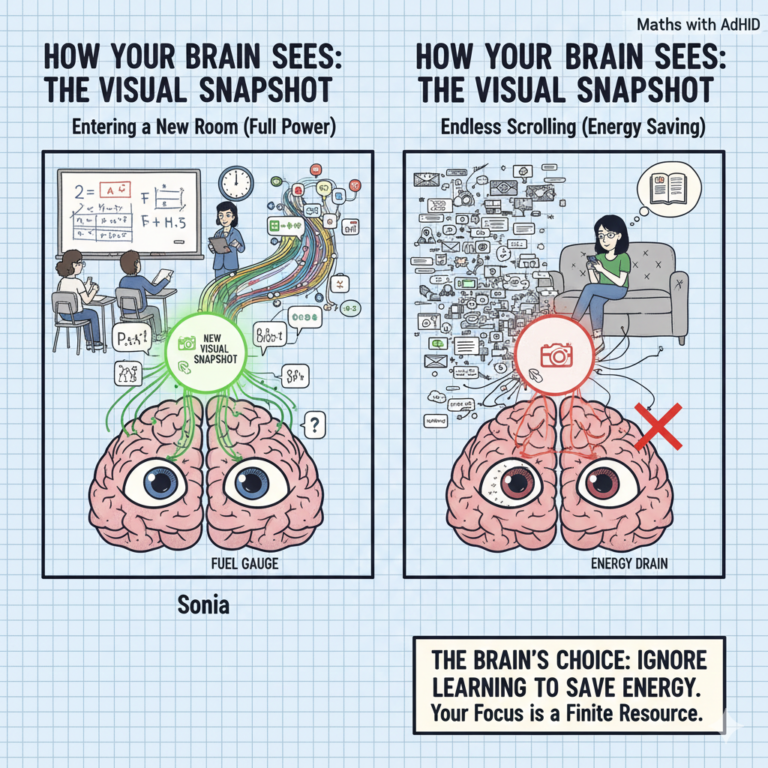
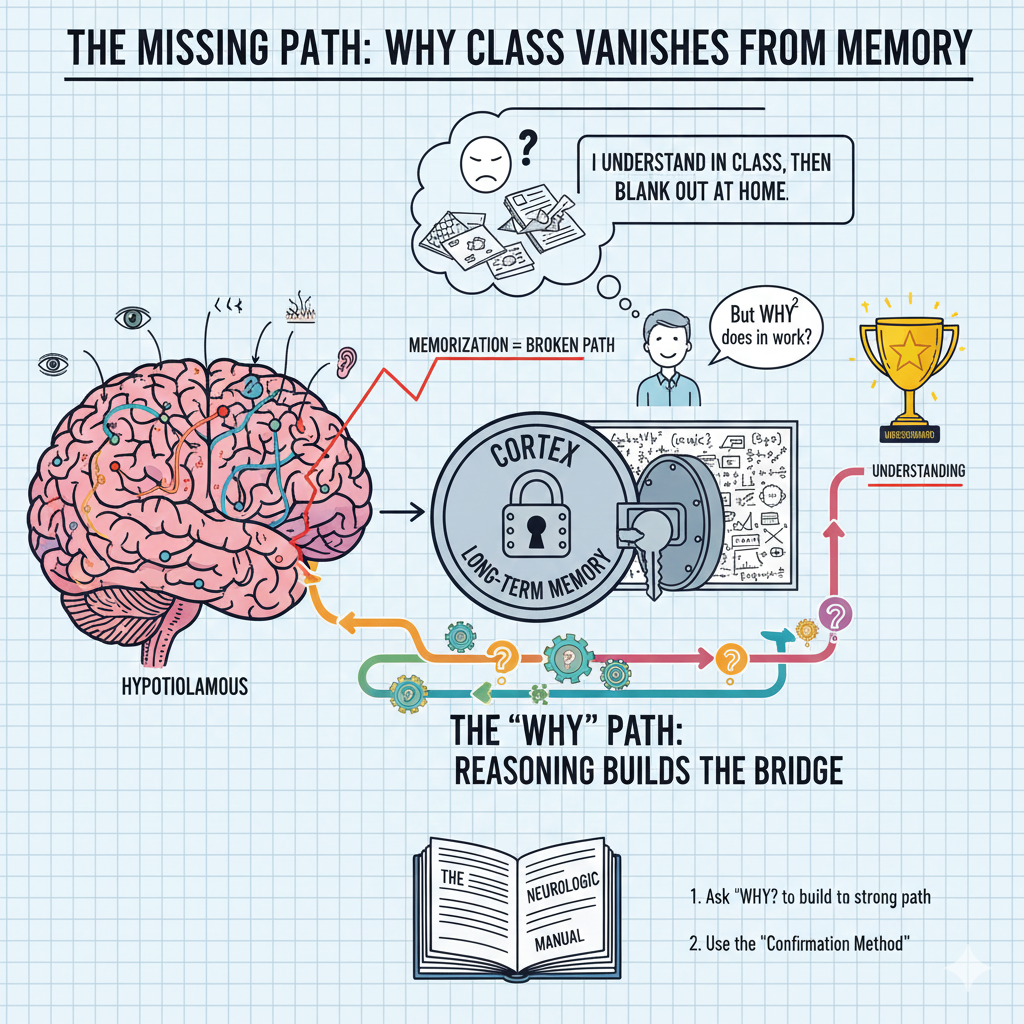
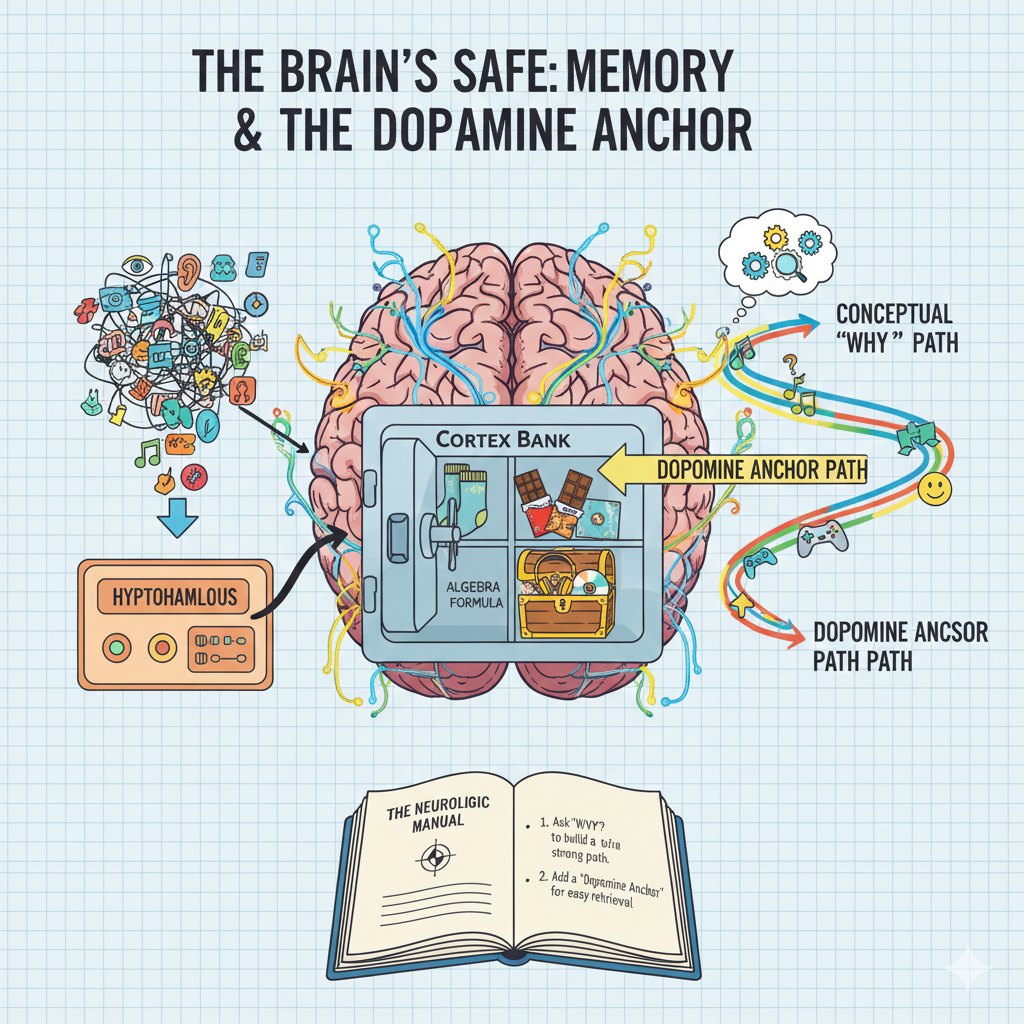
Every piece of information you meet—numbers, sounds, diagrams, textures—enters through the senses and is routed to the hypothalamus. That centre sorts, filters, and sends it to the cortex, where the data is stored like items in safes: precise, organized, but not automatically accessible.
You retrieve a “safe” in only two reliable ways:
• You create a path by asking “why?”
Reasoning burns a trace into the cortex. The brain labels the information as meaningful, not random.
• You associate it with something you already love.
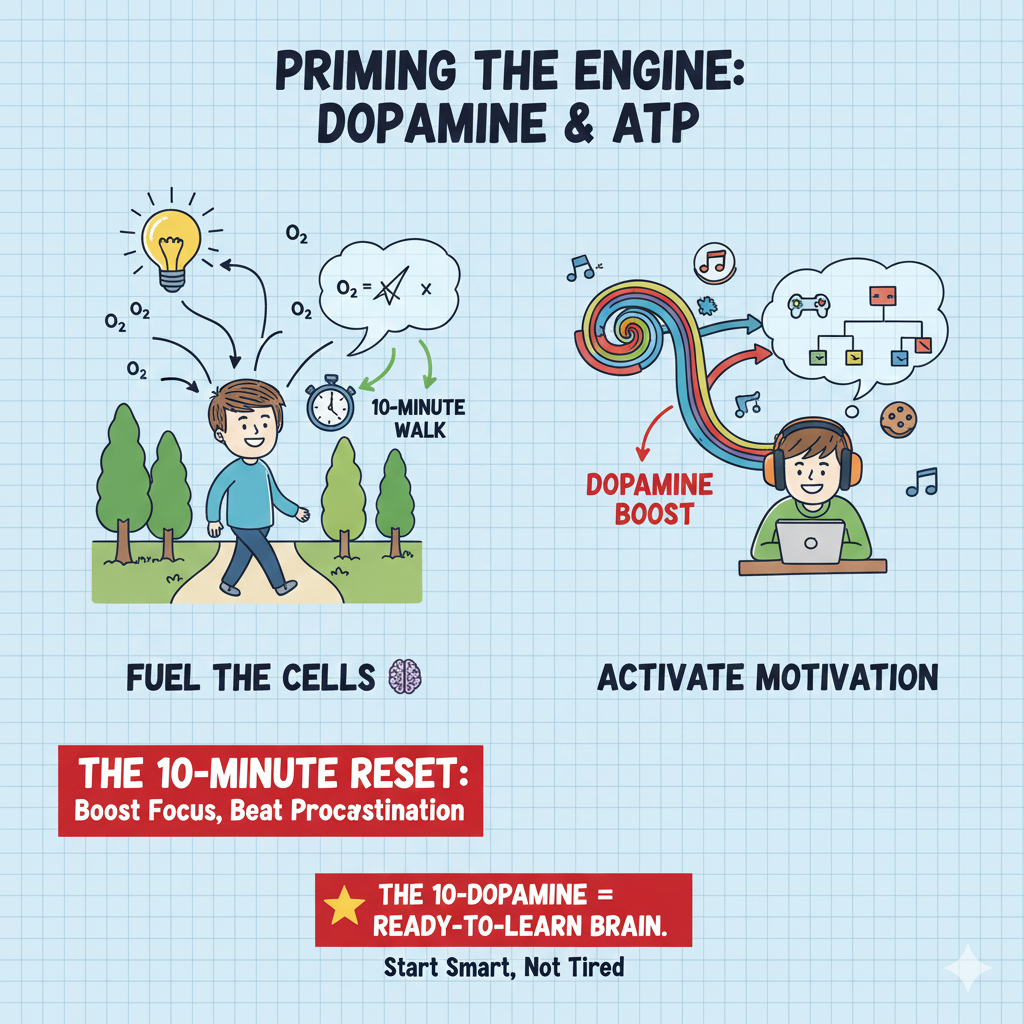
If you place your favourite music or snack next to the content you avoid, the brain retrieves the “snack” and drags the maths with it. Retrieval becomes automatic, not forced.
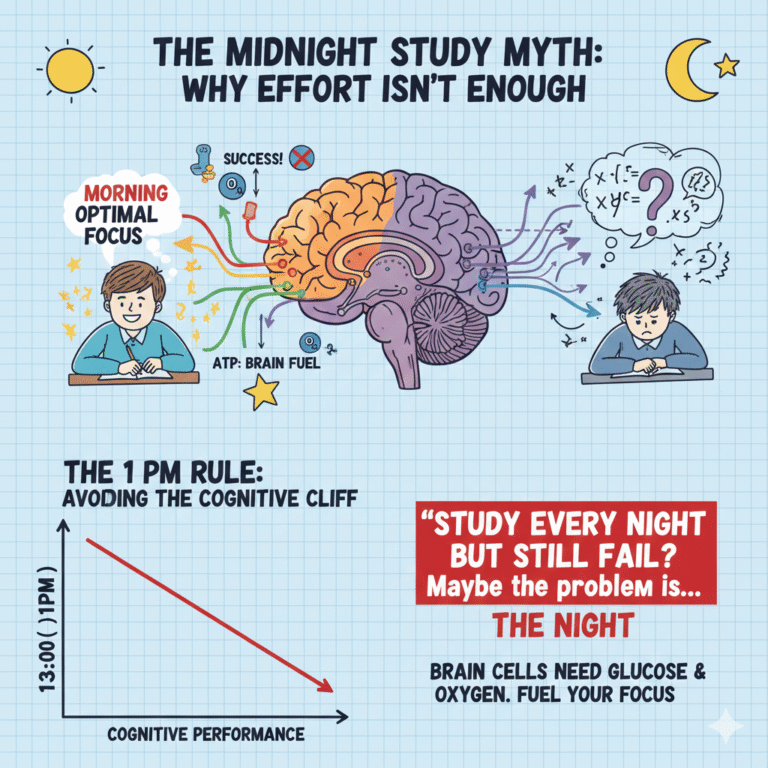
Most students don’t fail the content. They fail the biology.
Creating Super-Strong Memory Safes
Your brain stores new information (what you’ve learned) in specialized “safes” in the cortex. The challenge is creating a reliable path to open that safe later.
Guidance: Combat boring math facts by putting something you love next to the information you need to retrieve. If you need to remember a complex geometry rule (the “boring socks”), pair it with a strong sensory anchor (your favorite snack, song, or video game character). When you search for the high-dopamine anchor, you effortlessly retrieve the math concept alongside it.
1. The “Why” Path (Conceptual Understanding):
Guidance: Instead of asking How do I solve this? always ask Why does this formula work? Asking Whyforces your brain to build a deep, structural path straight to the safe. This path is strong and hard to forget. So never feel shy or embarrassed to ask even the simplest questions. When you solve the most difficult questions in the exam but not having clue of the easy concepts the reason is that you skipped that one “small” step. Or sometimes when you struggle understand one simple part of the concept the reason usually lies in that small path. Think like driving car and the map has given to you, you thought that part of the road was easy to remember you didn’t need to ask why you should go from there and when you were on the way, you realised that every road seems same and now you’re lost. This what happens exactly in your brain when you don’t ask why. (My classmates used to tease me for “why was I asking it was 90 degrees angle, even when it was triangle. They would say oh it’s obvious, come on move on!… Guess who has maths degree now! )
2. The Dopamine Anchor (Association):
Guidance: Combat boring math facts by putting something you love next to the information you need to retrieve. If you need to remember a complex geometry rule (the “boring socks”), pair it with a strong sensory anchor (your favorite snack, song, or video game character). When you search for the high-dopamine anchor, you effortlessly retrieve the math concept alongside it.
I think this is little bit obvious but I know there are still some parents or teachers claim listening music while you are studying is not right? Hello? Are you living in my brain? You can even watch a TV show something you had watched before, just put as background voice and it will even reduce your stress! One of favourite thing I recommend for studying anything new, opening a teaching video and doing a favourite activity, cooking, painting, anything you like! You can even listen maths class by this way. Your cortex doesn’t need eyes! Your brain will encrypt any information no matter where they come from, either from eyes or from ears..
If you are interested more you can watch this
And if you have more questions please don’t hesitate to send email to mathematicsbysonia@gmail.com or go to mathswithadhd social media channels and dm me!